Personal Branding for Consultants That Attracts Clients
As a consultant, your personal brand isn't just a professional headshot and a tagline. It’s the very practice of marketing you—your expertise, your unique perspective, and your hard-won experience—as a distinct and valuable entity. It’s about intentionally shaping how you’re perceived, establishing yourself as the go-to authority in your niche, and making it a no-brainer for high-value clients to seek you out directly.
Why Your Personal Brand Matters More Than Ever
Let’s be honest: in a marketplace flooded with talent, being an expert simply isn't enough anymore. What truly sets you apart is your reputation and your visible authority. Clients today aren't just buying a service; they are investing in the proven credibility of the individual they're hiring. A well-crafted personal brand works for you 24/7, acting as your silent salesperson, building trust and rapport long before a proposal is even on the table.
This isn't an exercise in vanity. It's about building a resilient, future-proof consulting business where the right clients come to you. The results are tangible: shorter sales cycles and the confidence to charge what you're actually worth. Ultimately, the goal is to become unforgettable. For a deeper dive, see how to improve brand awareness and build your brand.
The Shift From Service Provider To Thought Leader
Think about how modern clients find solutions. Their journey almost always starts online, searching for answers and looking for confident, authoritative voices to guide them. This is precisely where your personal brand becomes your most powerful asset. By consistently sharing valuable insights, you stop being just another service provider and transform into a recognized thought leader.
This shift directly impacts your bottom line. In fact, it's projected that by 2025, nearly 70% of B2B purchase decisions will be heavily influenced by the credibility of individual experts. That stat alone underscores just how critical your personal brand is to your future success.
A powerful personal brand doesn't just open doors—it makes clients knock on them for you. It turns your expertise into a magnet for opportunities, ensuring you spend less time chasing leads and more time delivering value.
The infographic below really drives home the business impact of a deliberate personal branding strategy.
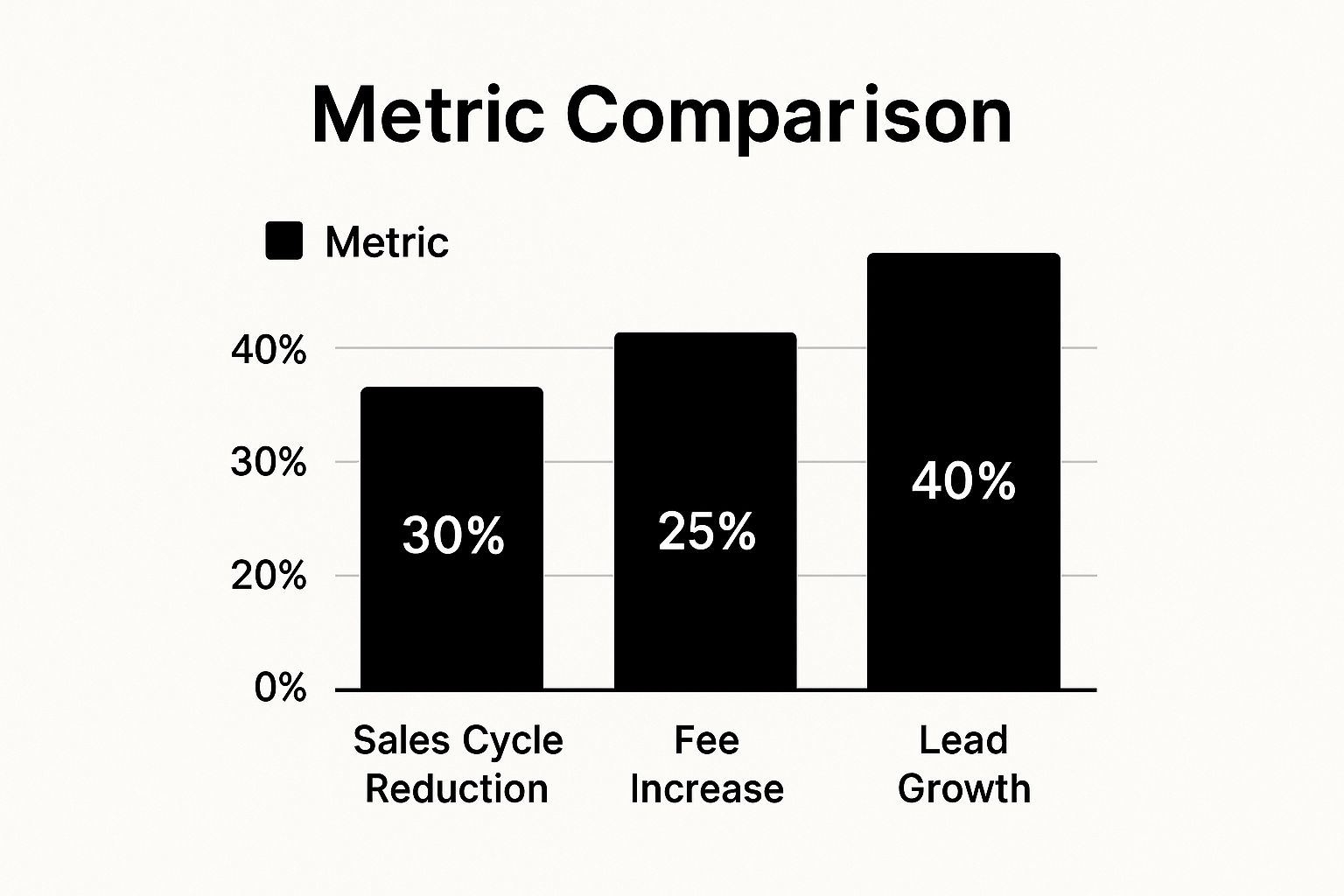
As you can see, consultants who actively build their brand see real, measurable improvements in lead generation, the fees they can command, and overall sales efficiency. It is, without a doubt, the most effective way to build a sustainable pipeline of high-quality work. For more on this, check out our guide on how to increase brand awareness and truly stand out.
Finding Your Niche and Defining Your Core Message
Let's be blunt: calling yourself a "business consultant" is a surefire way to get lost in the crowd. It’s far too broad. If you want to build a personal brand that actually attracts high-value clients, you have to transition from a generalist to a specialist. The goal is to become the go-to expert for a very specific problem in a very specific industry. That's how you become memorable.
This all starts with finding your niche. I always tell consultants to look for the sweet spot where three things intersect: your deepest expertise, the work you genuinely love doing, and a market with a painful, expensive problem you can fix. A classic mistake is picking a niche that's still too wide. "Helping startups grow" is a start, but "helping B2B SaaS startups reduce customer churn in their first year" is where the real power is.

When you get that specific, your branding efforts become laser-focused and infinitely more effective because you're speaking directly to a small, well-defined group of people who need exactly what you offer.
Articulating Your Unique Value Proposition
Once you've nailed down your niche, you need to craft a core message that instantly communicates your value. This isn't just a catchy tagline; it's a tight, clear statement explaining who you help, the problem you solve for them, and the unique result you deliver. Think of it as the foundation for every piece of content you create and every conversation you have.
A powerful value proposition is all about the client's transformation, not a list of your services.
Here’s what I mean:
- Generic: "I'm a marketing consultant for small businesses." (So are thousands of others.)
- Specific & Value-Driven: "I help independent e-commerce stores implement automated email sequences that recover at least 20% of abandoned carts within 90 days."
See the difference? The second example is magnetic. It’s specific, it promises a tangible outcome, and it targets a crystal-clear audience. This kind of clarity is what gets you hired. In fact, a staggering 85% of hiring decisions are influenced by a professional's online brand presence, which shows just how much a sharp message matters.
Speaking Directly to Client Pain Points
Your core message will only land if it connects with a real, nagging pain point. Amateurs talk about what they do; true experts talk about the problems they solve. To do this effectively, you have to get inside your ideal client's head. What’s keeping them awake at 3 AM? What roadblocks are stalling their growth?
Your brand message should feel like the answer to a question your ideal client has been asking themselves for months. It needs to show empathy and expertise in a single stroke.
Get granular about their struggles. For instance:
- Are they consistently losing bids to bigger, more established competitors?
- Is their team’s morale in the gutter, leading to high turnover?
- Are they completely overwhelmed by new technology and terrified of being left behind?
When you build your niche and message around solving these kinds of specific problems, you stop being an option and start becoming the only logical solution. Getting this foundation right will inform every single thing you do with your brand from here on out. If you're ready to get started on this, our guide on how to define a target audience is the perfect next step.
Building Your Digital Footprint and Visual Identity

Once you've nailed down your core message, it’s time to build the digital real estate where your brand will live and breathe. This is where you create a professional, cohesive online presence that commands respect and builds immediate trust with potential clients.
A solid digital footprint is everything for a modern consultant. It's often the first place a prospect will look you up, so every touchpoint needs to reinforce your expertise. The good news? You don't need a massive, expensive setup. You just need to be intentional and consistent. Understanding how to build an online presence that gets results is less about being everywhere and more about being effective where it counts.
Choosing Your Key Digital Platforms
For most consultants, the game is won on just a few key platforms. It's about depth, not breadth. Let's break down where you should focus your energy.
| Platform |
Best For |
Content That Works |
| LinkedIn |
Networking with decision-makers, demonstrating expertise, and direct client outreach. It's the modern B2B consultant's home base. |
Thought leadership posts, insightful comments on industry news, case studies, and short video clips explaining a concept. |
| Personal Website |
Acting as your central hub. It's the one place you own and control, perfect for showcasing services, testimonials, and capturing leads. |
Detailed service pages, in-depth blog posts, client success stories, a clear "Work With Me" page, and an email newsletter sign-up. |
| Twitter (X) |
Engaging in real-time industry conversations, sharing quick insights, and connecting with peers and journalists. |
Quick takes on breaking news, threads that break down complex topics, and links to your longer-form content (like blog posts or podcasts). |
| Niche Forums/Communities |
Building authority in a highly specific vertical (e.g., industry-specific Slack groups, Reddit communities, or private forums). |
Answering questions genuinely, sharing your experiences without a hard sell, and becoming a trusted resource. |
The key is to pick one or two platforms you can truly commit to. A stellar LinkedIn profile and a simple, effective website are often all you need to get started.
Crafting a Cohesive Visual Identity
Consistency is the bedrock of a memorable brand. A cohesive visual identity makes you instantly recognizable, whether someone sees your LinkedIn post, visits your website, or gets a proposal from you. This isn't about hiring an expensive agency; it’s about establishing a few simple, powerful rules.
Your visual brand is the silent ambassador for your expertise. A professional and consistent look signals to clients that you are serious, detail-oriented, and trustworthy before they read a single word.
Focus on getting these fundamentals right:
- A Professional Headshot: This is non-negotiable. Invest in a high-quality photo where you look confident and approachable. Use the exact same one everywhere.
- A Simple Color Palette: Pick 2-3 primary colors that reflect your brand’s personality. Use a tool like Coolors to find a palette that works, and then stick to it on your website, social graphics, and documents.
- A Readable Font: Choose 1-2 clean, professional fonts for all your communications. Consistency here creates a subtle but powerful sense of unity.
By thoughtfully managing these visual elements, you create a brand experience that feels buttoned-up and professional. For a deeper dive, our guide on creating a brand identity can walk you through the entire process.
Crafting a Sustainable Content and Thought Leadership Plan
https://www.youtube.com/embed/0R_3iarc8IA
Your expertise is a powerful asset, but it's completely invisible until you make it tangible. This is where a smart content plan comes in. It’s the engine that turns your knowledge into visible thought leadership, consistently showing clients why you’re the only person for the job.
The goal isn't to become a full-time content creator. It's about strategically sharing what you already know without burning yourself out. So many consultants make the mistake of trying to be everywhere at once. A much better approach is to pick a few formats that feel natural to you and resonate with the people you want to reach.
Choosing Your Content Pillars and Formats
A sustainable content strategy starts with your "content pillars"—these are the core topics you can speak about with genuine authority. Think about your niche and the biggest problems you solve for clients. From there, nail down 2-3 core pillars that will become the foundation of everything you create.
Once you have your pillars, you can decide how to bring them to life. Here are a few formats that I've seen work incredibly well for consultants:
- In-Depth Articles: Perfect for your website or LinkedIn, these pieces showcase deep expertise. They also build long-term SEO value and position you as a careful, strategic thinker.
- Client Case Studies: Nothing builds trust faster than a compelling story. Frame your case studies as a clear "before-and-after" narrative, detailing how you helped a client get a specific, measurable win.
- Short-Form Video: Got a quick tip or a strong take on industry news? Short-form video is fantastic for breaking down a complex idea into something digestible and engaging, especially on LinkedIn.
- Exclusive Newsletters: This is your direct line to your most loyal followers. It's a powerful way to build real relationships by sharing insights you don't post anywhere else.
The best content plan isn't the most ambitious one—it's the one you can actually stick with. Always choose quality and consistency over sheer volume.
Every piece of content you share amplifies your brand. Don't underestimate its power; research shows that leads generated through an individual's social media can convert 7 times more frequently than other sources. That's the impact of personal influence. You can find more detail on personal branding statistics at dsmn8.com.
The Power of Repurposing to Avoid Burnout
The secret to staying consistent isn’t having a bottomless well of ideas. It's getting really good at repurposing. One great idea can fuel your content calendar for weeks, saving you an incredible amount of time while driving your message home on different platforms.
Think of it as a "create once, distribute many" model. A single in-depth article, for example, can be broken down into a dozen smaller assets.
A Real-World Repurposing Workflow
- The Pillar Piece: You write a 1,500-word blog post: "5 Common Customer Onboarding Mistakes Early-Stage SaaS Companies Make."
- LinkedIn Carousel: Each of those 5 mistakes becomes a slide in a clean, visual carousel post.
- Short-Form Videos: You pull out your phone and film a quick 60-second video for each mistake, explaining the problem and a simple fix.
- Newsletter Content: You share a more personal story related to one of the mistakes in your next email, giving your subscribers an exclusive, behind-the-scenes look.
- Twitter (X) Thread: You create a thread that boils down the key takeaways from the article into a fast, scannable format for a different audience.
This is how you work smarter, not harder. You create one high-value "pillar" asset and then chop it up to feed different channels in the formats they prefer. Your personal brand stays active and visible, and you don't have to constantly reinvent the wheel.
Actively Promoting Your Brand and Engaging Your Network

Look, creating brilliant content is only half the battle. If your best insights are just sitting on a blog collecting dust, your expertise might as well be a secret. This is the moment you have to shift gears from being a content creator to an active brand builder. For consultants, the real magic happens when you start promoting your work and genuinely engaging with people.
It’s all about making sure your hard work actually gets in front of the right eyeballs at the right time. You're not just shouting into the void; you're trying to start meaningful conversations that pull in those dream projects and inbound leads. This proactive mindset is what separates the consultants people forget from the ones they can't wait to hire.
Go Beyond Posting and Start Engaging
Just dropping a link to your latest article on LinkedIn with a generic "check this out" is a waste of time. The platform, and people in general, reward real interaction. To make this work, you have to get into the trenches and participate in the conversations already happening in your niche.
It’s a fundamental shift in perspective. You’re not a broadcaster; you're a member of the community, contributing to the bigger professional dialogue.
Don't just share content—use it to start conversations. Ask questions, tag relevant peers for their input, and always reply thoughtfully to every single comment. The algorithm and your future clients will both reward you for it.
So, how do you actually do this?
- Comment with Insight: Find posts from other leaders in your field and leave a comment that adds real value. Don't just say "great post." Add your own perspective, expand on a point they made, or even respectfully challenge an idea.
- Share Others' Work: See a great article from a colleague or an industry publication? Share it. But don't just hit the share button—tag the author and add a sentence or two explaining why you found it so insightful. This builds incredible goodwill and shows you're a curator of valuable information, not just a self-promoter.
- Use Interactive Features: Platforms like LinkedIn have built-in tools like polls, questions, and carousels for a reason. Use them! They make it incredibly easy for your network to chime in and engage with your ideas.
Amplify Your Reach Beyond Your Own Feed
While nurturing your own channels is crucial, you can't stay in your own backyard forever. To really grow, you need to break out of your immediate circle. This means proactively looking for chances to share your expertise on other people's platforms, which introduces your brand to entirely new audiences.
When someone else features you, it’s an instant credibility boost. It shows your authority isn't just self-proclaimed; it's recognized by others in your field.
Actionable Amplification Strategies
- Become a Podcast Guest: Think about what podcasts your ideal clients listen to. Find them, and then pitch the host with a few specific, high-value topics you could talk about. Being a guest on a relevant podcast is like getting a direct endorsement.
- Offer to Speak at Virtual Events: Industry groups and companies are always looking for experts to present at webinars or virtual summits. Reach out and offer to speak on your core topic. It's a fantastic way to generate leads and solidify your reputation.
- Contribute to Industry Publications: Keep an eye out for opportunities to write guest articles or provide expert quotes for pieces in your niche. Seeing your name and byline in a respected publication is a powerful trust signal for potential clients.
Every one of these moves expands your digital footprint and hammers home the core message of your personal brand. By actively getting your name out there and engaging like a real person, you create a powerful cycle: your visibility grows, your authority solidifies, and high-quality clients start coming to you.
Answering Your Top Questions About Personal Branding
Diving into personal branding can feel a bit like opening Pandora's box—suddenly, you're flooded with questions. I get it. Every consultant I've worked with has grappled with similar uncertainties, so let's clear up a few of the most common ones right now.
One of the biggest mental hurdles is the "ick" factor of self-promotion. Many brilliant experts cringe at the thought of selling themselves. The reframe here is crucial: you're not bragging. You're generously sharing your expertise to help people solve real problems.
Personal branding isn't about becoming a social media influencer. It's about becoming influential in your niche. It’s the art of making your expertise visible, accessible, and trusted by the people who need it most.
Another big one is time. With a full plate of client work, business development, and just running the show, where does branding fit in? The trick is to stop seeing it as another massive project and start weaving it into your daily routine.
How Much Time Do I Really Need to Spend on This Each Week?
Forget the idea that you need to block out huge chunks of your calendar. Consistency will always beat cramming. Honestly, 30 focused minutes a day will do more for your brand than a four-hour panic session once a month.
Here’s what that actually looks like in practice:
- 15 minutes: Jump on LinkedIn. Don't just scroll—leave thoughtful, insightful comments on posts from key people in your industry. Add to the conversation.
- 10 minutes: Circle back to your own content. Reply to comments, welcome new connections, and show people you're engaged and approachable. This is how you build a real community.
- 5 minutes: Share one valuable thing. It could be your latest article or a great piece you read, but always add your own two cents to show your perspective.
That’s a little over two hours a week. It's totally manageable. The goal is to make it a professional habit, just like clearing your inbox.
Do I Have to Be on Every Single Social Media Platform?
Not only can you avoid it, you should avoid it. Spreading yourself thin is a recipe for burnout and weak results across the board. This is one of the most common mistakes I see.
For most consultants, mastering LinkedIn is the only thing you need to do.
Think about it: where do your ideal clients hang out professionally? For almost any B2B consultant, the answer is LinkedIn. Your website can act as your home base—your digital storefront—but your daily brand-building efforts should be laser-focused on that one key channel.
Depth and quality on a single platform will always win against a shallow presence on five. Your brand needs a home, not a dozen empty apartments.
Ready to stop guessing what to post and start building a brand that attracts clients? Outbrand creates a complete, on-brand social media content calendar for you in minutes. It's time to stop the guesswork and start growing. Create your 30-day content plan today.